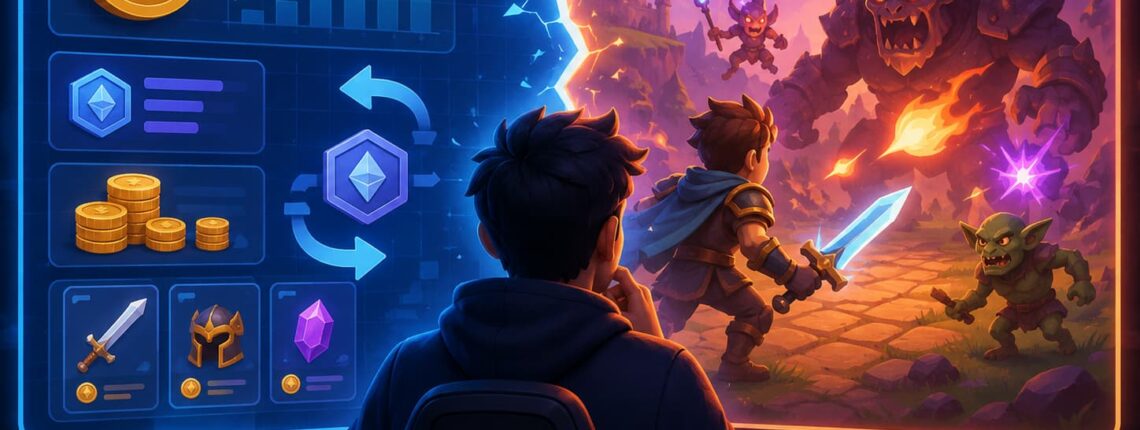
NFT games promise something traditional games rarely offer: the idea that players can own, trade, and sometimes earn from in-game assets. A sword can become an NFT. A hero can be sold on a marketplace. A token can reward time spent in battles, quests, tournaments, or crafting. On paper, this creates a powerful model. The player is not only a user. The player becomes part of the game economy.
But this promise also creates one of the hardest problems in Web3 gaming. NFT games must balance two very different systems at once. They need a token economy that feels valuable and sustainable. They also need gameplay that is fun enough to keep players active even when rewards are lower. Many projects struggle because these two goals often pull in opposite directions.
A good game wants players to return because the experience is interesting. A strong economy wants players to care about scarcity, rewards, prices, and ownership. In a traditional game, designers can focus mostly on balance, progression, challenge, characters, story, and player satisfaction. In an NFT game, every design decision can also affect asset value, token supply, marketplace behavior, and player expectations. That makes the system much more fragile.
When Earning Starts to Shape Player Motivation
The first challenge is that earning can change player motivation. When a game offers financial rewards, some players stop asking whether the game is enjoyable and start asking whether the game is profitable. This does not mean earning is bad. Rewards can make progression more exciting. Ownership can make assets feel more meaningful. But if the main reason to play is income, the game becomes vulnerable. When token prices fall, reward rates drop, or farming becomes less profitable, many players may leave.
This is why “play-to-earn” often creates pressure on game design. If rewards are too generous, the economy can inflate quickly. Too many tokens enter circulation. Asset prices become unstable. New players may find entry costs too high or returns too low. If rewards are too small, players who joined for earning feel disappointed. The developer must constantly adjust supply, rewards, fees, sinks, and upgrades. Every adjustment can upset part of the community.
The second challenge is that fun and efficiency are not always the same thing. Players who focus on earning will often search for the most efficient strategy. They may repeat the same missions, use the same characters, farm the same resources, or avoid creative play because the reward system pushes them toward optimization. This can make the game feel like work. Instead of exploring, experimenting, or enjoying the world, players may follow spreadsheets and profit calculations.
For a game designer, this is dangerous. A game that becomes only a farming loop can lose its emotional appeal. Players need challenge, surprise, skill expression, progression, and meaningful choices. If every decision is reduced to token yield, the game becomes less like entertainment and more like a task.
Why Asset Value Can Damage Game Balance
The third challenge is asset value. NFT games often sell characters, land, weapons, skins, cards, or equipment. These assets need to feel useful enough for players to want them. But if expensive assets become too powerful, the game risks becoming pay-to-win. New players may feel they cannot compete without buying rare or costly NFTs. That damages gameplay fairness and makes the game less welcoming.
On the other hand, if rare NFTs do not matter enough, buyers may feel cheated. Why pay more for a rare asset if it does not improve performance, unlock special content, or create a clear advantage? This creates a design trap. The asset must be valuable, but not so dominant that it ruins balance. It must feel special, but not mandatory. That is difficult to achieve.
The fourth challenge is token volatility. A game token can move in price for reasons that have little to do with the quality of the game. Market sentiment, speculation, exchange listings, broader crypto trends, and whale activity can all affect token value. When the token price rises, the game may attract people who care mostly about short-term profit. When the price falls, even loyal players may feel less motivated because the reward layer looks weaker.
This creates an unstable relationship between gameplay and market psychology. A traditional game can survive because people enjoy it. An NFT game may be judged every day by charts, floor prices, reward rates, and marketplace volume. Even if the game itself improves, negative market movement can damage community confidence.
Another problem is that developers must manage both players and investors. Some users want better gameplay, smoother controls, stronger story, more content, and fair balance. Others want token growth, asset appreciation, staking rewards, and higher marketplace activity. These groups do not always want the same thing. A decision that improves game balance may reduce the value of a powerful NFT. A decision that supports token price may make the game harder for new players.
This makes communication very important. In NFT games, balance patches are not just gameplay updates. They can affect real asset value. If a developer weakens a popular character, changes reward formulas, increases upgrade costs, or adjusts token sinks, players may react not only as gamers, but as asset owners. The emotional reaction is stronger because money is involved.
Building an Economy Around Real Gameplay
Sustainable NFT games need strong token sinks. A token sink is a mechanism that removes tokens from circulation or gives players a reason to spend them. This can include upgrades, crafting, repairs, breeding, tournament entry, cosmetics, land development, or marketplace fees. Without sinks, rewards can flood the economy. But sinks must feel fair. If players feel that the game only forces them to spend tokens to keep playing, the economy begins to feel exploitative.
This is where good game design matters most. The economy should support the gameplay, not replace it. Players should want to upgrade because new strategies become available, not only because the system pressures them. They should want to own assets because those assets create identity, progress, and interesting choices. They should trade because the marketplace is part of the game’s ecosystem, not because the game itself is too boring.
The strongest NFT games will likely be those that move beyond the simple promise of earning. They will focus on ownership, strategy, community, competition, creativity, and long-term progression. Tokens and NFTs can still matter, but they should not be the only reason to play. If the gameplay is weak, the economy has to carry too much weight. That usually does not last.
A healthy NFT game needs several layers working together. The core gameplay must be enjoyable. The economy must avoid uncontrolled inflation. Rare assets must feel meaningful without making the game unfair. Rewards must motivate players without turning the game into a job. Marketplace activity must support the community without becoming the only measure of success.
Balancing all of this is hard because NFT games are not just games. They are games, markets, communities, and financial systems at the same time. That is why many projects struggle. The token economy can attract attention, but gameplay keeps people. If a project forgets that, it may get early hype, but lose long-term players.
In the end, the future of NFT gaming depends on a simple lesson: the economy should make a good game deeper, not cover up a weak one. Tokens can add value, but fun must remain the foundation. Without fun, the economy becomes pressure. With strong gameplay, the economy becomes an extra layer that gives players more reasons to stay.